

Each year, Earth travels approximately 940 million kilometres through space as it circles the sun. We each move at a speed of about 107,227 kilometres per hour. That motion is constant. What changed in 2025 was the clarity of two tracks.
On one, stagnation remained visible: conflict, climate pressure, democratic backsliding. On the other, the conditions for breakthroughs advanced strongly - compressing timelines by years, in some cases decades.
When the world is moving faster outside your organisation than inside it, you are not ‘behind’. You are operating in a different reality.
In reviewing the breakthroughs of 2025, one pattern stands out. While many leaders prepared for disruption and disorder, something else was happening in parallel. Structural friction was being removed - discretely and deliberately - across digital trade, energy, healthcare, and work. This created a velocity gap.
When external advances move into application faster than internal systems can respond - whether that is fusion edging closer to the grid or AI moving into clinical use - the gap is not theoretical. It is lost advantage. It marks the difference between organisations that endure upheaval and those that benefit from it.
The strategic question for 2026 is straightforward.
Are you aligned with the direction the world is moving, or organised to defend what already exists?
That answer determines whether you are set up for a zero-sum holding game, or for positive-sum momentum.

Our Focus. Our Favour.
What we focus on shapes our decisions, trajectory, and outcomes.
Over the last decade, many leaders have been trained to see volatility - fires, floods, elections, crises - without noticing where friction is actually being removed. Digital rails. Health systems. Energy infrastructure. Governance frameworks. These are less visible than emergencies, but far more consequential.
Those who treat these signals as invitations to explore and experiment - building businesses, services, and solutions on emerging positive-sum infrastructure - operate in a very different opportunity set. Those who focus primarily on risk management and defending the status quo do not.
In short, what we focus on determines what we can leverage. And whether we are positioned to merely survive upheaval, or to benefit from the pathways of possibility it creates.
Shifts that Spun Faster in 2025
Predicting 2026 is difficult. The signals from 2025 are not.
They point to structural shifts that now shape strategy, capital allocation, and where leaders choose to place their time, talent, and reputation.
Rather than a single storyline, 2025 delivered a catalogue of positive-sum breakthroughs: treaties that turned the high seas into a governed commons; AI systems that moved from conversation into clinical and industrial action; fusion plants that began to look like infrastructure rather than science fiction; and work experiments that converted hours into health and output rather than burnout.
This article focuses deliberately on positive-sum breakthroughs. The dominant narrative still centres on capital intensity, market capture, and winner-takes-all milestones - particularly in generative AI. These matter. Yet they obscure a deeper signal about where value is now being created, and how widely it can be shared.
What follows is a 2025 acceleration map: 20 areas where motion increased. Some compound risk. Others expand the frontier of possibility. They are not predictions. They are outcome-based signals from the year just passed. Together, they describe the operating environment that now exists for globally ambitious leaders.
Business and Economy
1. A Soft Landing and Resilient Global Growth
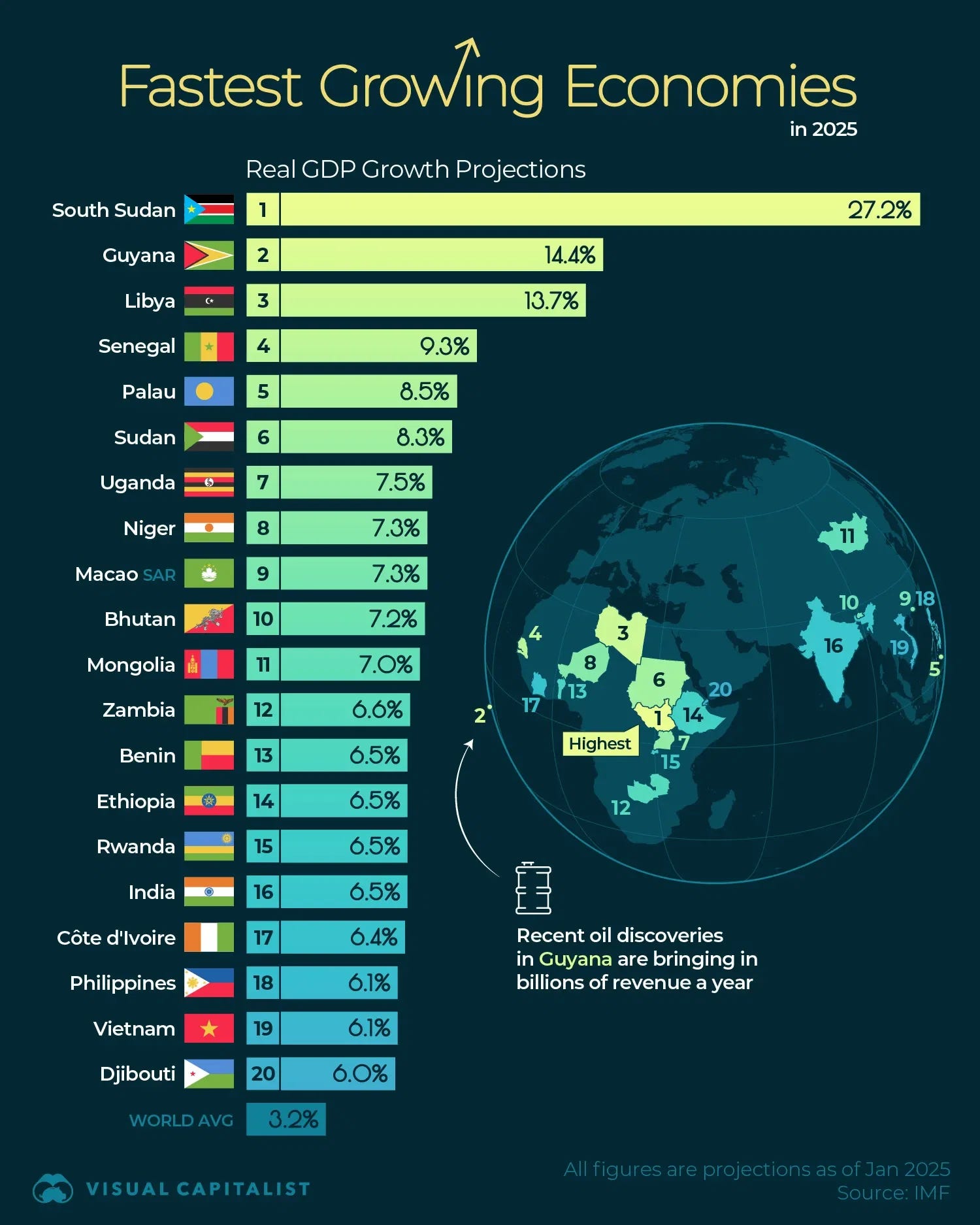
The global economy defied widespread forecasts of a hard landing: the IMF forecast global growth of about 3.2% in 2025, slightly higher than previous projections, with inflation easing in many regions even as labour markets remain relatively tight. This resilience has been driven less by ultra‑loose monetary policy and more by productivity gains, real wage growth in emerging markets, and the expansion of digital trade, gradually shifting the centre of gravity toward the Global South.
2. South–South Trade and the ‘Vietnam Premium’
Global trade is set to exceed US$35 trillion in 2025, with UNCTAD estimating around 7% growth in global trade value and highlighting particularly strong growth in South–South trade flows. Vietnam stands out: average monthly wages reached record levels in 2025 as foreign direct investment increased and the economy moved further into electronics and higher‑value manufacturing, signalling a shift from cheap labour to skilled, resilient supply chains.
3. Frontier Economies as Demand Engines
While full‑year data are not yet published, IMF projections in late 2025 show the world’s fastest‑growing economies being led by frontier markets such as South Sudan, Guyana, Libya, and Senegal. This growth is fuelled by factors including offshore oil development, post‑conflict rebounds, and manufacturing‑driven development. Although their absolute size is modest, these economies play an outsized role in projected aggregate demand growth and in attracting new investment flows relative to their scale.
4. Digital Trade Architecture Scales (DEPA)
Although the multilateral trading system remains constrained, the Digital Economy Partnership Agreement expanded, with Costa Rica concluding substantial accession discussions in January 2025, while China and Canada continued engagement through Accession Working Groups. DEPA’s modular rules for cross‑border data flows, e‑invoicing, and digital identity provide a backbone for paperless, end‑to‑end digital trade. It reduces document‑handling costs, speeding up payments, and allowing businesses - especially SMEs - to connect to overseas partners more efficiently even amid broader tariff volatility and geopolitical tension.
Technology and Innovation
5. Fusion’s Private‑Sector Breakthrough
Public megaprojects such as the ITER fusion reactor confirmed major delays and budget overruns, pushing key operational milestones well into the 2030s, even though fusion’s long‑term prize is abundant, zero‑carbon baseload power with minimal long‑lived waste and much lower meltdown risk than fission. In contrast, Helion Energy broke ground in July 2025 on what could become the world’s first commercial fusion power plant in Washington State, backed by a long‑term power purchase agreement with Microsoft. It has effectively turned fusion from a distant science project into a near‑term commercial bet with a defined customer, timeline, and business model.
6. Reusable Heavy‑Lift Becomes Routine
SpaceX’s Starship programme continued its rapid testing cadence in 2025, building on late‑2024 demonstrations of fully reusable operations in which the Super Heavy booster was caught by the launch tower and the upper‑stage Starship was recovered after flight. Together with successful on‑orbit engine restarts and multiple full‑stack flights that returned both stages for re‑use, Starship is evolving from an expendable prototype into a genuinely reusable heavy‑lift system, designed to fly repeatedly with rapid turnaround rather than being discarded after a single mission. This step‑change in reusability drives down the cost per kilogram to orbit and enables planning for large‑scale orbital infrastructure - such as massive solar arrays and in‑space manufacturing platforms - rather than one‑off prestige missions constrained by launch costs.
7. Top 10 Emergent Technologies Go From Lab to Field
The World Economic Forum’s Top 10 Emerging Technologies of 2025 highlighted technologies on the cusp of real‑world deployment, including structural battery composites, osmotic power, engineered living therapeutics, and green nitrogen fixation, each pairing decarbonisation benefits with economic upside. Taken together, they erode the old assumption that growth and sustainability must be traded off.
8. Agentic AI and Predictive Healthcare
AI systems moved from ‘chat’ toward clinical and operational action, with models from Google and other research groups demonstrating the ability to predict acute kidney injury up to 48 hours in advance and to detect conditions like hypertension and sleep apnoea from wearable‑device data. These capabilities shift healthcare toward proactive risk management, with knock‑on effects for insurers, hospitals, and employers.
Leadership and Global Trends
9. Middle Powers and Female Leadership Redraw the Map
2025 extended the rise of middle powers and delivered historic firsts, including Japan’s parliament electing Sanae Takaichi as the country’s first female prime minister and Namibia inaugurating Netumbo Nandi‑Ndaitwah as its first female president. These milestones diversify where global decisions are made and reflect electorates rewarding competence and renewal over long‑entrenched hierarchies.

10. Indonesia Joins BRICS and Jakarta Surpasses Tokyo
Indonesia officially joined BRICS in January 2025, adding Southeast Asia’s largest economy to the bloc, while Jakarta was reported to have overtaken Tokyo as the world’s largest urban area by population. Together, these moves underscore Southeast Asia’s growing strategic weight in trade, finance, and connectivity.
11. AI Safety Enters the Treaty Era
The Council of Europe’s Framework Convention on Artificial Intelligence, Human Rights, Democracy and the Rule of Law – opened for signature in May 2024 and moving toward ratification in 2025 – became the first binding international treaty on AI. It focuses on embedding human‑rights principles into AI systems, providing a shared floor for governance across very different regulatory models.
12. Global Pandemic Preparedness Upgraded
In 2025, the World Health Assembly adopted the WHO Pandemic Agreement, designed to strengthen global preparedness by formalising pathogen access and benefit‑sharing and establishing mechanisms for coordinated supply chains and logistics during future health emergencies. The agreement explicitly seeks to avoid COVID‑era inequities by linking early data sharing to guaranteed access to vaccines and other countermeasures.
Sustainability and Climate Action
13. The High Seas Treaty Crosses the Ratification Threshold
In September 2025, the UN High Seas Treaty on biodiversity beyond national jurisdiction achieved its 60th ratification, triggering its entry into force 120 days later, with implementation expected in early 2026. The treaty introduces tools for high‑seas marine protected areas, environmental impact assessments, and benefit‑sharing for marine genetic resources, transforming vast ocean areas from legal grey zones into a governed commons.
14. Solar Desalination Scales as Decentralised Infrastructure
In February 2025, nonprofit GivePower opened its 17th Solar Water Farm in Ukunda, Kenya, expanding a network of containerised desalination systems that use solar power to produce up to 70,000 litres of clean water per day and are designed as financially self‑sustaining micro‑utilities. Similar projects are being replicated in other water‑stressed regions, demonstrating how decentralised infrastructure can complement or leapfrog large, centralised plants.
15. Plastics Treaty Stalls, Business Coalition Surges
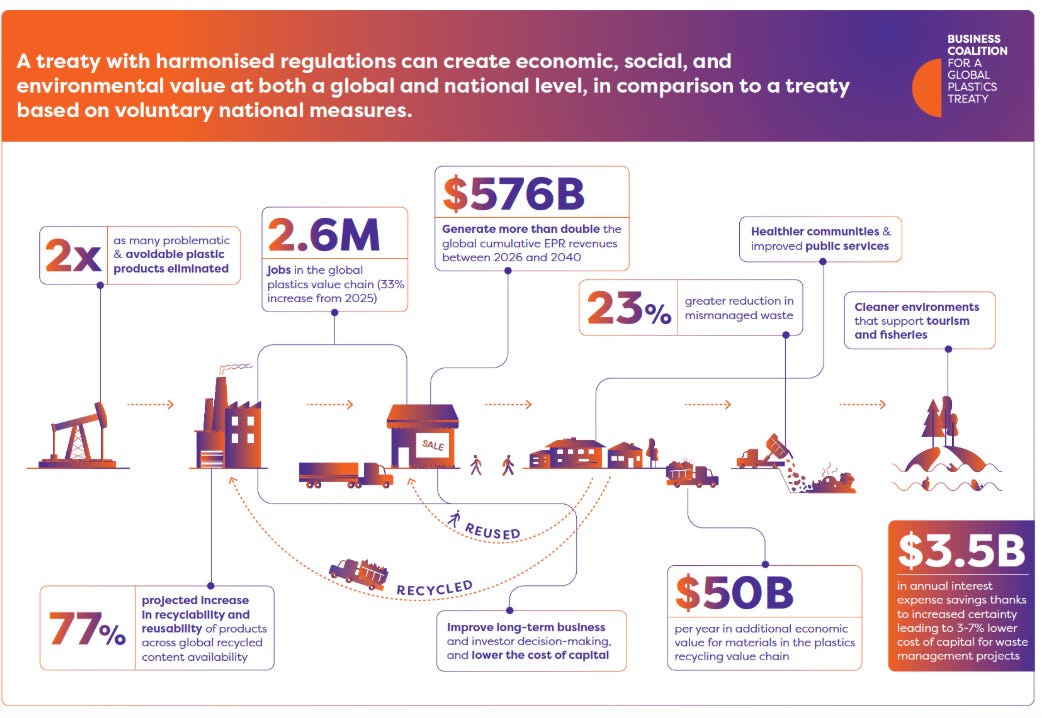
The August 2025 (INC‑5.2) negotiating session for a global plastics treaty failed to reach consensus on binding production caps, delaying agreement. However, a Business Coalition for a Global Plastics Treaty - now representing more than 300 companies and financial institutions across the plastics value chain – has converged on a detailed, science‑based proposal for a full‑lifecycle, legally binding treaty with harmonised global rules, supported by robust economic modelling that shows such rules would cut mismanaged waste, create jobs, and unlock hundreds of billions of dollars in new investment. This is significant because it flips the usual script: instead of business lobbying to dilute regulation, a critical mass of global brands, converters, and financiers is now pushing governments toward tougher, harmonised rules that would create a level playing field, unlock large‑scale investment in reuse and recycling, and materially accelerate the end of plastic pollution.
16. Malaria Vaccines Start to Bend the Curve
By late 2025, 24 African countries had begun rolling out the RTS,S and R21 malaria vaccines as part of routine immunisation programmes, following WHO recommendations. Early data suggest meaningful reductions in malaria cases and all‑cause child mortality in vaccinated populations, laying the groundwork for substantial long‑term gains in education and economic productivity.
Geopolitics, Work and Human Capital
17. A New Social Contract at Work: The Four‑Day Week
Germany’s large‑scale four‑day workweek trial, whose results were published in 2025, found that around 73% of participating companies chose to maintain the four‑day schedule after the trial ended, reporting stable or improved productivity and significantly better employee wellbeing. This offers some of the strongest real‑world evidence yet that shorter workweeks can be commercially viable and strategically advantageous in tight labour markets.
18. Remote, Asynchronous Work Becomes Strategic, Not Just Tactical
Beyond headline battles over returning to the office, 2025 saw continued normalisation of hybrid and remote work, with U.S. and European data showing stable or rising shares of employees working remotely at least part‑time, particularly in knowledge‑intensive sectors. Companies increasingly relied on digital collaboration tools and AI assistance, nudging management cultures toward output‑based performance and asynchronous coordination.
19. Universal Basic Income Experiments Deliver Data, Not Ideology
Long‑running cash‑transfer and basic income pilots, such as GiveDirectly’s study in rural Kenya, released further evidence in 2024–2025 that predictable cash payments can increase business creation, improve psychological wellbeing, and raise investment in children’s schooling. These findings challenge the assumption that unconditional transfers primarily discourage work and reframe income security as a potential engine of local dynamism and economic activity.
20. Digital Public Infrastructure Becomes a Global Export
India’s Digital Public Infrastructure (DPI) - notably Aadhaar for identity, UPI for real‑time payments, and the broader India Stack - moved from national experiment to global template, with components adopted, piloted, or formally requested by more than 20 countries across Asia, Africa, and Latin America. This accelerated financial inclusion and digital service delivery in lower‑income states by lowering transaction costs and enabling governments, businesses, and citizens to plug into interoperable, low‑cost digital rails instead of relying solely on proprietary, high‑fee systems dominated by global card schemes and platforms.
Problems + Progress to Inform 2026
Taken together, the record of 2025 reveals a paradox. The story of stagnation is real - yet incomplete.
Positive-sum breakthroughs across trade, governance, energy, health, and work show that humanity’s problem-solving capacity has not stalled. It has evolved. At the same time, unresolved crises remind us that progress remains uneven and reversible.
As we start 2026 and begin another 940-million-kilometre journey through space, the velocity gap is widening - between leaders who optimise for zero-sum defence and those who design for positive-sum motion.
The strategic question is no longer “What is changing?”
It is:
Where is friction being removed - and how will you align with that direction of travel?
These 20 accelerations form the basis for the question that matters most as the year turns:
What sped up for you - positively or negatively - that could materially change what is now possible in 2026?
Wow.. you paint such a positive picuture.. when the entire world seems to focus on everything that is wrong around us!! Thanks for shifting the focus..
This morning I woke early and listened to Six Surprising Facts about Handel’s Messiah, a beautiful conversation with music between Ivars Taurins and Robert Harris. It set me thinking about the deep joy of Christmas and how, here in Australia, that spirit flows well beyond Christmas Day.