

In 1746, Homann Heirs published Johann Baptist Homann’s map of the world. It presented the world as its makers understood it: a picture people could use to understand their place in it and make decisions.
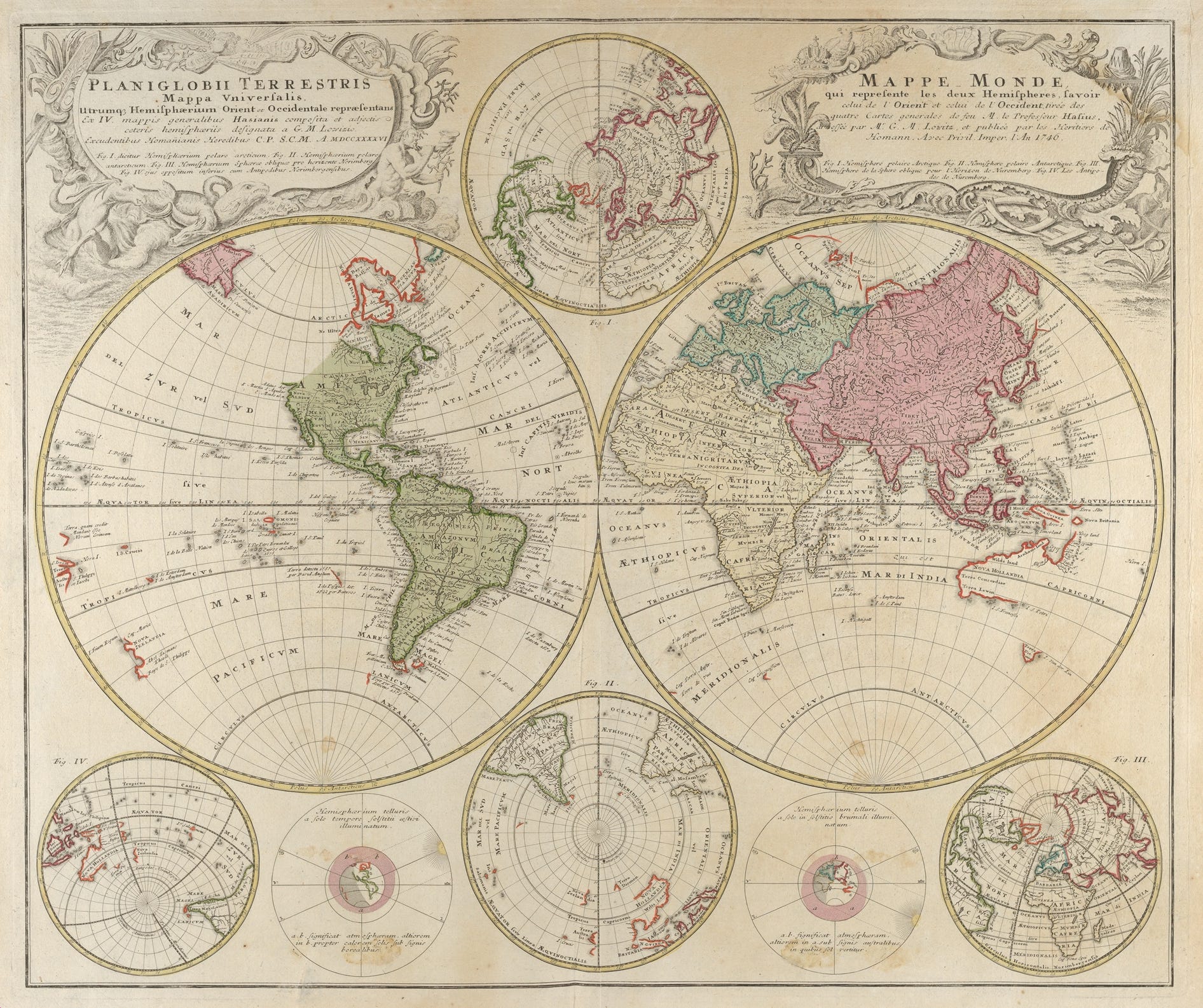
Throughout history a map has reflected the limits of its time. Its makers decide what deserves attention, which places sit at the centre, and which connections matter.
Leaders work with maps today. Some show geography on screens and walls. Others are mental maps, held in investment assumptions, market forecasts, and beliefs about who holds power.
These maps age as the world changes.
For business leaders, mapping means tracing where value is created, where money flows, and who can influence decisions and set terms - across the world, within our industry or market, and inside our organisation.
Whether we operate locally or across borders, these forces shape where we can invest, whom we depend on, and which outcomes we can influence.
Changing the Optics
Some updates change labels. On the 27th August 2026, President Trump ordered U.S. federal agencies to rename Lake Ontario as “Lake America” in maps, contracts, documents, and official communications. Subsequently, Google displayed different names depending on the user’s location. (I’m in Australia where both names are shown.)
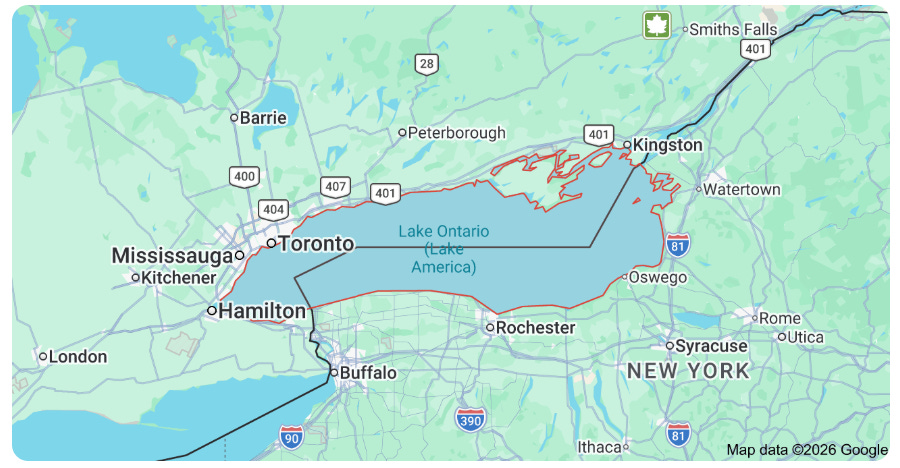
The change bears political meaning while physically the lake remains the same. It changes the optics: how the lake is named and presented.
Mapping Chokepoints
Other updates change outcomes: which projects receive investment, what businesses pay, which markets they can access, and who earns the returns.
This is where chokepoints matter.
A chokepoint is where a flow of money, goods, information, or decisions depends on controlled access. Whoever controls it can influence what moves, how quickly, at what price, and on whose terms.
Some are physical: a shipping passage, a critical supplier, or an electricity connection. Others involve permission, information, trust, or authority: a licence, access to customer data, a relationship that opens a market, or an approval held by one person.
Inside organisations, investment assumptions and definitions of risk determine which opportunities receive money, which evidence carries weight, and who has authority to act.
Chokepoints shift when the conditions that sustain them change. A trusted partner can open access to customers. Technology can reduce dependence on a supplier. Regulation can open a market, while new evidence can give decision makers confidence to fund a project. Each change can alter who sets the terms and who captures the value. These shifts can be difficult to see at first, yet their influence can grow over time.
In the month of October 2025 alone, India’s Unified Payments Interface (UPI) handled 20.7 billion transactions. Before UPI, bank transfers commonly required the recipient’s account number and bank branch code. UPI connects bank accounts through participating apps, letting people pay using a simple payment address or QR code. It simplified payments and became a major route through which money flows.
An old map can keep us paying for access that has become easier to secure, directing capital towards a constraint that has eased, or leaving decision-making power with people whose role has changed.
It can also obscure a new concentration of power. We may generate more value while a supplier, platform, or intermediary gains greater control over our customers, costs, or margins.
Changing Outcomes
Updating the map means tracing the flows and testing what governs them. In mapping exercises with my clients, we begin by asking:
Where is value being created, and who captures it?
Where does money flow, and what directs it?
Who controls access, pricing, and the terms of exchange?
Which dependencies have weakened, and which have grown?
Which shifts in technology, regulation, demographics, or geopolitics are changing these flows, and how?
What evidence would justify moving capital or changing decision-making authority?
Keeping our map current helps us decide where to invest time and attention, whom to partner with, and which constraints to address, monitor, or leave alone.
What’s your view? Beyond the optics, which chokepoints have shifted, and what outcomes can we now influence?
When the Meeting Ends, What Works?

In the Northern Hemisphere, monarch butterflies are migrating south. They are leaving their summer breeding grounds for less harsh conditions throughout winter. They travel beyond familiar territory in response to an instinct to survive.
Wins Within Borders Can Jeopardise Bigger Wins
In 1985, scientists reported a hole emerging in the ozone layer above Antarctica. Chemicals used in refrigeration, aerosols, and industrial processes were damaging the atmospheric layer that protects life on Earth from harmful ultraviolet radiation.
In 2026, leadership demonstrates the ability to produce wins within borders, within existing markets, and within established business models.
It is rarer for leaders to have the ability to see the wider system: to recognise when the greatest opportunity lies beyond competing more effectively within existing constraints - in changing the conditions that create risk, value, and possibility across them.
The Burden of Knowing Better
“We’ve always done it that way.” This is possibly the most dangerous phrase to be spoken in an organisation today.
Letting Ideas Win Over Hierarchy
“You have to be run by ideas, not hierarchy,” Steve Jobs said. “The best ideas have to win, otherwise good people don’t stay.”