

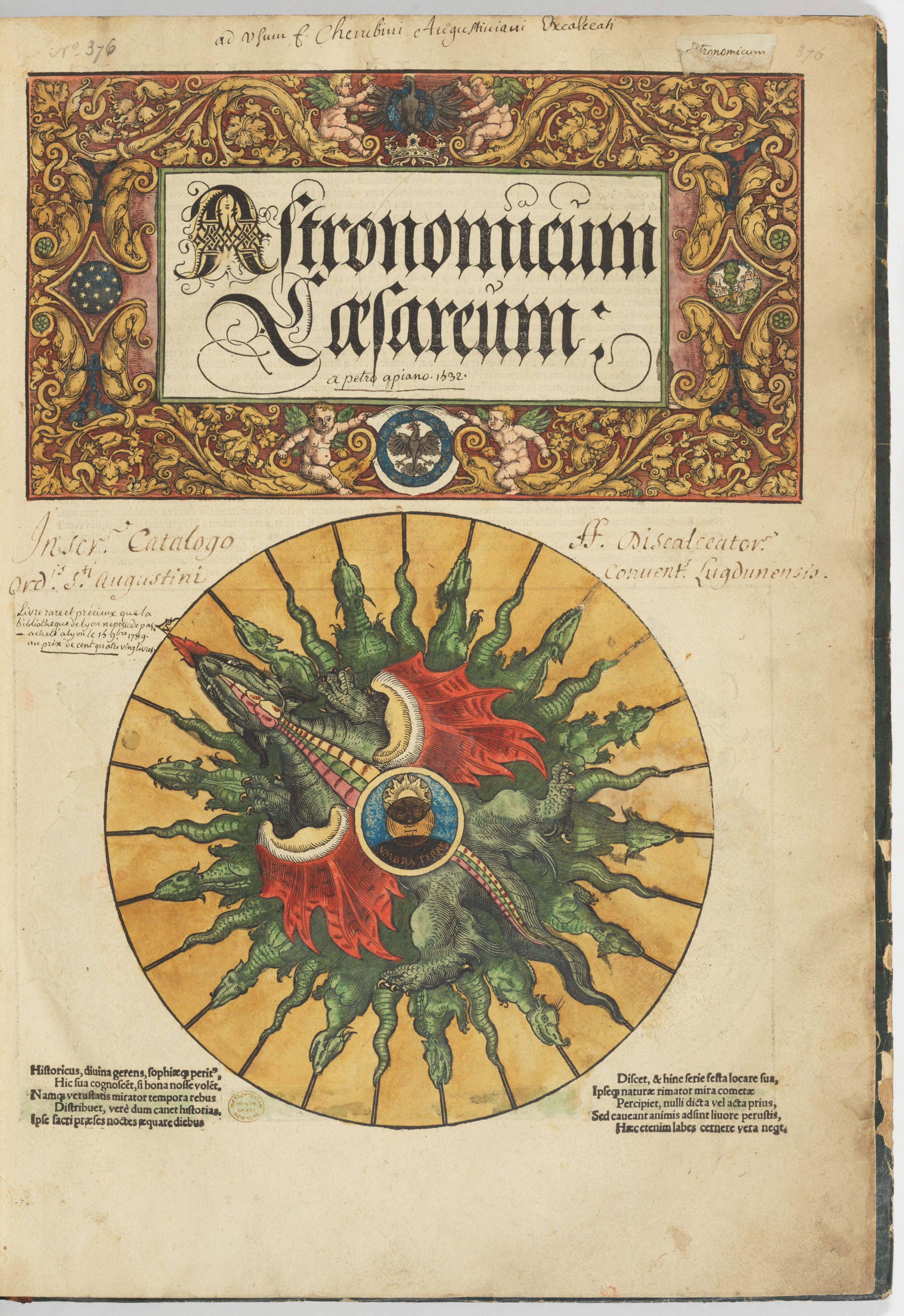
In 1540, the Astronomicum Caesareum was published and contained paper wheels that rotated for readers to calculate the positions of planets. They believed that these calculations could help them forecast the weather and make decisions about health. Their understanding of the sky became a tool for making decisions on Earth.


Today, we have increasingly more data and evidence to inform business decisions. A useful calculation translates that evidence into a choice: should we continue with our current approach, or is a different approach now worth the time, attention, and investment it would require?
Calculating the Cost
To illustrate how evidence can help us assess a business opportunity, let’s look at carbon emissions.
A 2026 study in Nature estimated the worldwide economic damage caused by one extra tonne of carbon dioxide released in 2020. Under one set of assumptions, the damage from 2020 to 2100 was about US$1,013 per tonne, measured in 2020 values. The researchers used a 2% annual discount rate. This means they gave less weight to damage further in the future.
This calculation produces an estimate of harm across society. It is not the price a customer has agreed to pay. It helps explain why reducing emissions matters. It also gives us a basis for calculating what a specific response could be worth, who might pay for it, and what they could expect in return.
The next step for a business leader is to assess whether your business could deliver a solution that someone would pay for, at a cost that allows you to earn a return. Specifically:
Who would benefit, and how?
Who has a reason and a budget to pay?
What would it cost to deliver a measurable result?
Could the income cover those costs and provide a return?
The people who benefit may be different from those who pay. Identifying both is part of building the business case.
Changed Conditions, Changed Economics
A proposal that was rejected two years ago may benefit from an updated calculation. This could involve entering a market, testing a new business model, or developing a new product or service.
Check whether new technology, lower delivery costs, or a different partner changes what you could achieve. An approach that was previously judged too expensive or difficult may now be viable.
Changed conditions also warrant a broader look at the value we could create in the world. Which problems remain unsolved? Could we play a role in addressing them? Is there a market in the mission?
This wider view helps us avoid treating new technology or productivity gains as a business case in themselves. We still need to establish who would benefit, who would pay, and whether we could earn a return. It can also help us look beyond immediate returns and reconsider longer-term initiatives that have previously struggled to secure support.
Compare the proposed approach with continuing as you are. Include the costs, risks, and likely returns of each.
Making the Case
With clients, we start by calculating whether an opportunity is worth their time and money. What has changed? Does it now make financial sense? What still needs to be tested?
We then use that work to seek support. People who control budgets and investment are in demand. They are asked to support many initiatives that matter, often with too little information to assess whether each is viable.
Our role is to make that assessment easier. We can show them what the approach would cost, what it could deliver, what evidence supports the estimates, and what remains uncertain.
Is it time to update the calculation? We can’t look to the planets for answers (unless that’s your thing). We can work through the numbers using the available evidence.
The opportunity may have seemed out of reach. The business case for pursuing it may now have changed.
Do the maths: Is there a market position from solving this hard problem?

Some hard problems remain hard because the cost of solving them is too high to act on. Others remain hard because no one can agree on what leaving them unsolved is costing. Carbon has been the second kind for most of the last two decades, which is why it has largely been treated as a compliance obligation rather than a market position. The argument has …
You Create Value. Who Captures It?

In 1746, Homann Heirs published Johann Baptist Homann’s map of the world. It presented the world as its makers understood it: a picture people could use to understand their place in it and make decisions.
The Burden of Knowing Better

“We’ve always done it that way.” This is possibly the most dangerous phrase to be spoken in an organisation today.